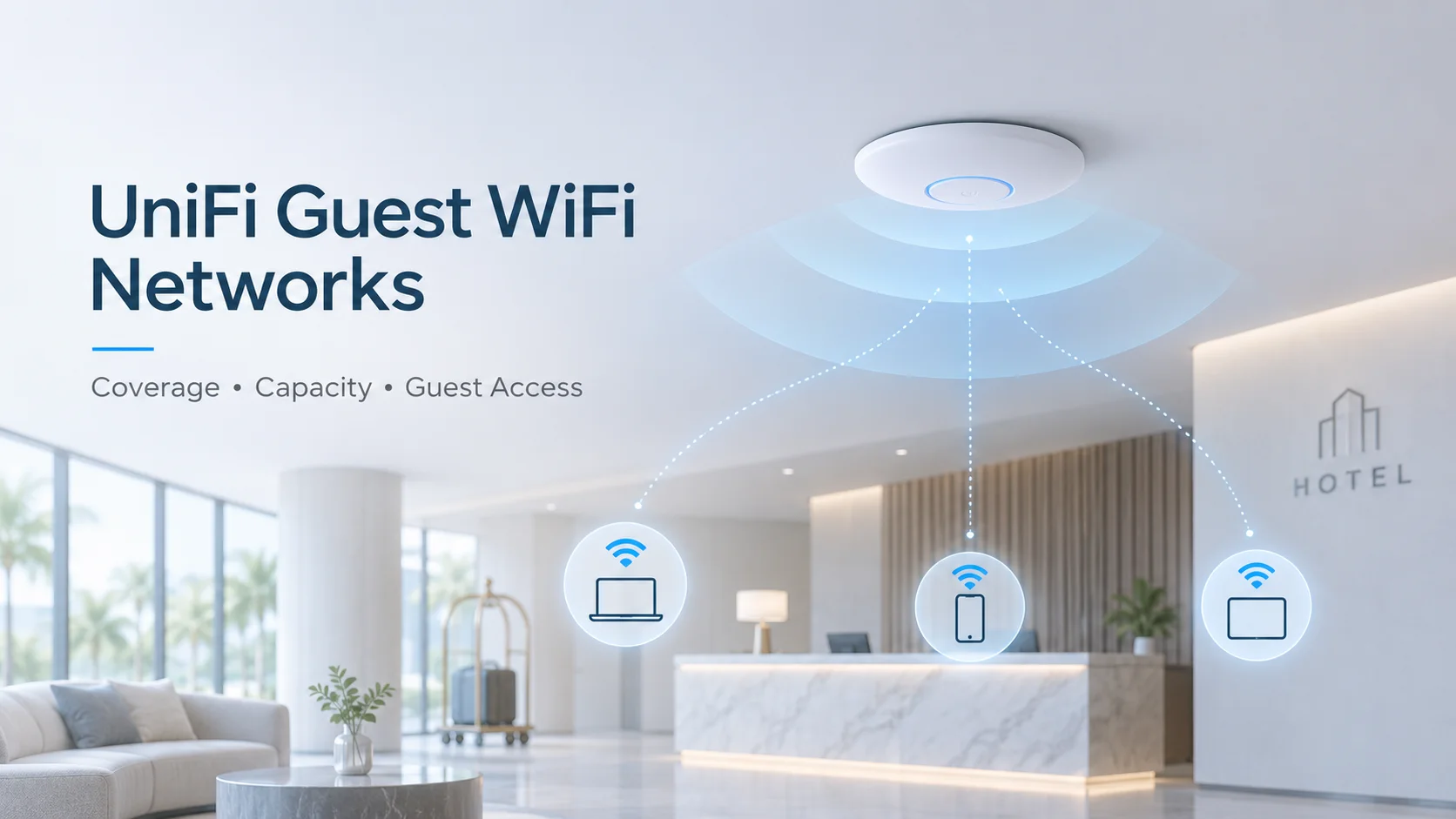
UniFi guest WiFi networks can provide the network infrastructure hotels need to deliver connectivity across guestrooms, lobbies, restaurants, meeting spaces, and other guest areas. However, installing access points alone is not enough to create a reliable hotel WiFi experience.
Hotels also need to consider coverage, network capacity, guest access management, security, technical support, and how WiFi fits into the wider property operation.
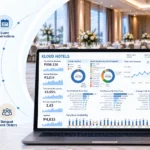
Jinisys materials specifically list UniFi under Wi-Fi hardware integration, while KloudHotels includes a Wi-Fi System capability for managing and controlling access for in-house guests.
This makes it important for hotels to plan both the network infrastructure and the operational guest-access process.
What Should Hotels Consider When Planning UniFi Guest WiFi Networks?
Before deploying or expanding a UniFi guest network, hotels should first understand how guests will actually use the connection.
The network may need to support:
- Smartphones
- Laptops
- Tablets
- Smart TVs
- Business travellers
- Families with several devices
- Meeting and event guests
- Restaurant customers
- Long-stay guests
The number of users and devices can change significantly throughout the day.
For that reason, hotels should avoid planning the network based only on the number of rooms.
They should also consider expected device density and the different areas where guests will need connectivity.
1. WiFi Coverage Across the Property
Coverage is one of the first considerations.
A guest may expect WiFi in more areas than just the bedroom.
Depending on the property, coverage may be needed in:
- Guestrooms
- Corridors
- Lobby areas
- Restaurants
- Function rooms
- Meeting spaces
- Pool areas
- Business centres
- Reception areas
- Other common spaces
Physical walls, room layouts, construction materials, floors, and the location of access points can all affect wireless coverage.
This is why access point placement should be planned carefully rather than simply installing devices wherever convenient.
2. Network Capacity and Device Density
Strong signal does not always mean strong performance.
A hotel network may show good WiFi coverage but still struggle if too many devices are competing for network resources.
Properties should consider:
- Number of guestrooms
- Average devices per guest
- Peak occupancy
- Conferences and events
- Restaurant traffic
- Staff devices
- Smart property equipment
- Internet bandwidth
A large function room can create a very different network requirement from a normal guest corridor.
Capacity planning therefore needs to reflect how each area of the hotel is actually used.
3. Guest WiFi Access Management
Hotels should also determine how guests will receive access.
WiFi access should have a clear operational process.
A simple guest journey may look like:
Check-In → Guest Verification → WiFi Access → Stay → Check-Out
KloudHotels includes a Wi-Fi System capability designed to manage and control WiFi access for in-house guests.
This allows hotels to consider WiFi access as part of the wider guest operation rather than treating connectivity as an isolated IT task.
4. Front Office and IT Responsibilities
Guest WiFi often involves both hotel operations and IT.
The front office deals directly with guests.
IT manages the network.
Without clear responsibilities, simple connectivity concerns can be passed unnecessarily between teams.
A practical division may look like this:
Front Office
- Verify guest status
- Provide basic access instructions
- Handle simple guest questions
- Escalate technical problems
IT Team
- Maintain access points
- Monitor network performance
- Manage coverage
- Handle technical configuration
- Troubleshoot infrastructure
- Maintain network security
A clear support process can help hotels respond more consistently.
5. Guest and Internal Network Separation
Hotels normally have more than one type of network user.
These can include:
- Hotel guests
- Employees
- Management
- POS terminals
- Front-office computers
- Hotel systems
- Security equipment
- Smart devices
The guest WiFi environment should therefore be planned separately from sensitive internal hotel operations where appropriate.
The exact network design will depend on the property’s requirements, but hotels should avoid treating every connected device as if it belongs to the same operational environment.
6. Structured Cabling and Network Infrastructure
Wireless access points still depend on the underlying physical network.
Poor cabling, network bottlenecks, or badly positioned equipment can affect the guest experience.
Jinisys can support broader requirements such as:
- Wi-Fi infrastructure
- Structured cabling
- Network design
- Hardware installation
- Technical support
- Software and hardware integration
This means hotels should think beyond individual access points and consider the entire network environment.
7. Internet Bandwidth
Good wireless coverage does not guarantee fast internet.
The property also needs enough internet capacity to support actual guest demand.
Hotels should consider activities such as:
- Video calls
- Streaming
- Cloud applications
- Social media
- Large file transfers
- Multiple devices per guest
- Business events
Demand may also increase during evenings, conferences, and high occupancy periods.
Bandwidth planning should therefore reflect realistic hotel usage rather than only minimum technical requirements.
8. Meeting and Function Spaces
Conference rooms and function halls deserve special attention.
These areas can suddenly contain many connected devices at the same time.
A function room that normally sits empty may need to support dozens or hundreds of guests during an event.
Hotels should therefore consider event capacity when planning the WiFi environment.
This is especially important for properties that regularly host:
- Conferences
- Corporate meetings
- Weddings
- Banquets
- Training sessions
- Large group events
9. Guest Support and Troubleshooting
Even a well-designed network will occasionally need support.
Hotels should establish a clear process for handling concerns.
For example:
Guest Concern → Front Office Check → Access Issue or Technical Issue → Appropriate Team
This helps prevent every WiFi concern from becoming an IT ticket while still ensuring technical problems reach the right person.
10. How WiFi Fits Into the Hotel PMS Environment
WiFi should not be planned completely separately from the hotel’s operational systems.
KloudHotels is presented as part of an Integration Hub that includes WiFi alongside booking engine, back-office software, Resto Plus, channel management, analytics, and electronic door locks.
This reflects a wider approach to hotel technology where connectivity is one part of the overall property environment.
A practical way to understand the relationship is:
KloudHotels → Hotel operations and guest-access workflow
UniFi → WiFi infrastructure
Front Office → Guest assistance
IT → Network management and technical support
The exact configuration should always be confirmed based on the property’s selected implementation.
11. Do Not Assume Every UniFi Setup Works the Same Way
Every hotel has different requirements.
A small boutique hotel may have a very different network environment from a large resort or conference hotel.
Properties should consider:
- Number of rooms
- Number of floors
- Building layout
- Expected guest volume
- Event spaces
- Existing cabling
- Internet service
- Network equipment
- Support requirements
- Future expansion
The network should be designed around the property rather than applying the same layout everywhere.
12. Plan for Future Growth
Hotels should also consider whether the network can support future requirements.
A property may later add:
- More guestrooms
- New restaurants
- Function spaces
- Smart devices
- Additional POS terminals
- New hotel systems
- More connected guest services
Planning with future expansion in mind can help reduce the need for major infrastructure changes later.
How Can Jinisys Support Hotel WiFi Requirements?
Jinisys Software positions itself as more than a software provider.
Its materials show support for broader technology requirements including Wi-Fi infrastructure, network design, structured cabling, hardware installation, technical support, and software-hardware integration.
Jinisys also lists UniFi under its Wi-Fi hardware integration offering.
For hotels using KloudHotels, this provides a framework where hotel software, guest access processes, and property-level infrastructure can be planned as parts of one technology environment.
Better Guest WiFi Requires More Than Access Points
Successful UniFi guest WiFi networks depend on more than hardware.
Hotels need to think about:
- Coverage
- Capacity
- Access management
- Network design
- Cabling
- Security
- Guest support
- IT responsibilities
- PMS workflows
- Future scalability
The strongest approach is to plan guest WiFi as part of the wider hotel operation.
When network infrastructure and guest-access processes are considered together, hotels can create a more manageable and consistent connectivity experience.
For more information on how Jinisys Software can help you with What Hotels Should Consider When Using UniFi for Guest WiFi Networks, please contact us at 0917 947 7971, or visit us here:
Our Luzon Office:
602 BSA Twin Towers, Bank Drive, Ortigas Mandaluyong City Philippines
Our Visayas Office:
3/F 101 M.L Quezon St. Villa Aurora, Kasambagan Cebu City Cebu / Region 7 6000, Philippines